
Moss holds moisture against roofing, can grow beneath shingle edges, and may contribute to blocked gutters and faster material deterioration. British Columbia’s long wet season, shade, and tree cover encourage continued growth. Regular roof moss removal Vancouver service, followed by suitable preventive care, helps homeowners manage these conditions before the buildup becomes heavier.
No Monkey Biz is a Greater Vancouver exterior maintenance company serving homeowners, landlords, strata councils, property managers, and businesses since 2012. Its service area includes Vancouver, Surrey, Langley, White Rock, Abbotsford, Maple Ridge, and other Lower Mainland communities.
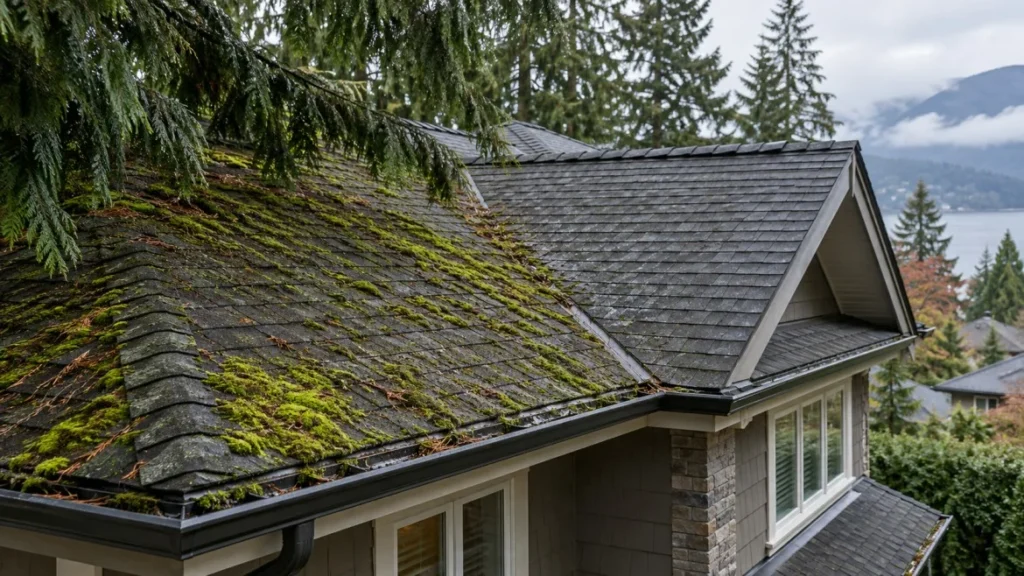
Why Is It Important to Remove Moss From Your Roof in a Rainy Climate Like British Columbia?
Removing moss matters because moss absorbs and retains rainwater instead of allowing a roof surface to dry normally. It can spread beneath asphalt shingle edges, disturb protective granules, collect debris, and interfere with the route water takes toward the gutters. Manufacturer GAF explains that moss can retain moisture, expand beneath shingles, and lift their edges. GAF also notes that retained moisture can contribute to shingle deterioration and create openings through which water may enter. The effect is especially relevant in the Lower Mainland. Long periods of rain, shaded roof slopes, mature trees, and mild temperatures can allow moss to remain active for much of the year.
The concern is not that every small patch means a roof has failed. The practical issue is that moss becomes harder to manage as it thickens and spreads. Early assessment usually provides more options than waiting until growth covers large sections of the roof or fills the gutters with loose material. The Roofing Contractors Association of British Columbia states that regular roof maintenance helps detect minor problems before they become major ones and protects the owner’s investment. This supports treating moss inspection as part of a broader roof maintenance plan rather than as a purely cosmetic service.
What Does Moss Do to Asphalt, Cedar, and Tile Roofs?
Moss does not affect every roofing material in exactly the same way. The appropriate removal method depends on the roof material, its age and condition, how firmly the moss is attached, and whether damaged areas are already present.
| Roof material | How moss may affect it | Main removal concern |
| Asphalt shingles | Moss can retain moisture, spread under edges, and disturb protective granules | Avoid high pressure, upward spraying, aggressive scraping, and excessive foot traffic |
| Cedar shakes or shingles | Persistent moisture and organic growth can interfere with drying and contribute to deterioration | Use a method suited to wood roofing and assess fragile, split, or weathered pieces |
| Concrete or clay tile | Moss can grow in joints and on shaded surfaces, while cracked or displaced tiles may already be present | Avoid walking carelessly on tiles or using a method that loosens or breaks them |
| Metal roofing | Growth may collect around seams, fasteners, transitions, or trapped debris | Confirm coating condition and use a compatible cleaning method |
| Low-slope roofing | Organic buildup may collect near drains, edges, equipment, or areas of ponding water | Protect the membrane and keep drainage points clear |
CertainTeed’s roof maintenance guidance says asphalt shingles can accumulate moss or algae and recommends professional cleaning with a suitable agent and gentle brushing. It specifically warns against using a power washer on asphalt shingles because high-powered spray can dislodge protective granules.
The same guidance notes that tile can crack when walked on and that wood shake requires appropriate maintenance because retained moisture can contribute to deterioration. A contractor should therefore identify the roof material and visible condition before selecting a treatment. Roof moss removal is not roof repair. If an assessment finds cracked tiles, curled shingles, exposed underlayment, damaged flashing, soft decking, active leakage, or structural movement, those concerns should be referred to an appropriate roofing professional.
Why Do Roofs in Vancouver and the Lower Mainland Grow Moss?
Roof moss needs moisture and a surface where it can establish itself. Lower Mainland properties often provide both because of frequent rain, high humidity, shade, nearby vegetation, and organic debris. North-facing roof slopes usually receive less direct sunlight than south-facing sections. They may remain damp longer after rainfall, which helps explain why one side of a house can show heavy growth while another side appears relatively clear. Tree cover is another major factor. Properties in Vancouver, North Vancouver, Burnaby, Surrey, Langley, White Rock, Abbotsford, and Maple Ridge may have branches above or beside the roof that reduce sunlight and drop leaves, needles, seeds, or small twigs.
Older character homes can have valleys, additions, dormers, chimneys, and complex roof-to-wall connections that collect debris. Newer subdivisions may have simpler roofs, but nearby trees, tightly spaced buildings, or limited exposure to direct sunlight can still produce shaded, damp areas. Strata and high-rise buildings face different concerns. Moss may develop on lower roofs, entrance canopies, townhouse blocks, parkade roofs, service structures, or shaded common-property surfaces. These areas require a coordinated access plan and a written scope that identifies which roof sections are included.
CMHC’s Mould in Housing resource focuses on indoor moisture and mould rather than roof moss, but its broader maintenance principle is relevant: identify and address the source of excess moisture instead of cleaning growth without considering why it developed. It also advises consulting appropriate professionals when moisture problems are complex.
What Are the Signs That a Roof Needs Moss Removal?
Visible green growth is the clearest sign, but homeowners should also watch for changes in texture, drainage, and the position of roofing materials. A ground-level inspection may reveal more than expected when completed after rain and again during a dry period.
Common signs include:
- Green patches spreading across shaded roof slopes
- Thick growth along shingle edges or between tiles
- Moss collecting in roof valleys and behind chimneys
- Loose moss appearing in gutters or at downspout outlets
- Shingle edges that appear raised or uneven
- Leaves and needles caught in established moss
- Gutters overflowing near moss-covered sections
- Roof areas that remain damp noticeably longer than surrounding sections
- Growth returning soon after a previous cleaning
- Moss forming below overhanging branches or beside taller neighbouring buildings
Do not climb onto the roof for a closer look. Moss, wet roofing, and loose debris can make roof surfaces difficult to access safely. Photographs taken from the ground, a safe window, or another suitable position can help a contractor assess what may be required.
A roof covered by heavy growth may need more than one stage of work. The contractor may need to separate loose debris removal, moss treatment, gentle physical removal, gutter clearing, and later follow-up.
How Is Roof Moss Removed Without Damaging the Roof?
Common approaches include careful hand removal, gentle brushing, low-pressure application of an appropriate treatment, and a follow-up process that allows dead moss to release gradually. The correct method depends on the roof material and condition. The phrase “soft wash roof” is sometimes used broadly. It should not be treated as one universal procedure. Water pressure, treatment type, dwell time, runoff control, plant protection, brushing, and rinsing all need to suit the specific roofing material.
Pressure washing asphalt shingles shouldn’t be used because excessive force can remove protective granules and lift shingles. Its moss-removal guidance describes low-pressure treatment and downward-directed rinsing rather than spraying water upward beneath shingle edges.
Hand Removal
Careful hand removal or gentle brushing may remove loose surface growth without blasting the roof. The direction of work matters because brushing upward against shingle edges can disturb the material.
Hand removal may not eliminate all remaining moss. A suitable follow-up treatment may be needed to address growth that cannot be removed safely during the first visit.
Low-Pressure or Soft-Wash Treatment
A low-pressure treatment may be used to loosen or control moss while limiting mechanical force. The treatment must be compatible with the roof and managed carefully around gutters, siding, gardens, pets, rainwater systems, and neighbouring property.
Preventive Treatment
Preventive care may help slow regrowth, but it does not make a roof permanently moss-free. Shade, moisture, branches, roof orientation, surrounding trees, and debris continue to influence future growth. Any preventive treatment should be explained in the written scope. The quote should clarify whether the service includes immediate removal, a treatment intended to work over time, gutter cleaning, plant protection, or a follow-up visit.
Pressure washing remains useful for some suitable ground-level surfaces, but it should not automatically be transferred to roof cleaning. Homeowners can review residential pressure washing services for driveways, patios, walkways, and other appropriate exterior surfaces.
When Is the Best Time to Remove Roof Moss in BC?
The appropriate time is when the roof can be accessed safely, and the selected treatment can be used under suitable weather conditions. In BC, spring through fall may provide workable periods, but the final decision depends on rain, temperature, roof moisture, daylight, material, and property access. Late summer and early fall can be useful because the roof may have longer drying periods before the wettest part of the year. Spring can also reveal growth that developed during winter.
November is not automatically too late. A contractor may still be able to assess the roof or complete suitable work during an appropriate weather window. However, active rain, frost, strong wind, wet roofing, or limited daylight may require rescheduling. Homeowners asking when to remove roof moss in BC should focus on roof condition rather than choosing a date from the calendar alone. Heavy moss, lifted materials, overflowing gutters, or visible damage should be assessed promptly, even if removal must wait for suitable conditions.
Many Lower Mainland properties may benefit from annual inspection and a removal or preventive schedule based on observed regrowth. A one- to two-year service interval may suit some homes, but it should not be treated as a fixed rule for every roof.
How Are Roof Moss, Gutters, and Water Management Connected?
Moss and roof debris eventually move downhill. Pieces can enter gutters, settle near outlets, and combine with leaves or needles to restrict drainage. When a gutter cannot carry water properly, overflow may appear near fascia, siding, entrances, walkways, landscaping, or the foundation area. Cleaning only the visible roof without checking the gutters can leave part of the moisture-management problem unresolved. The reverse is also true. A clean gutter does not solve moss spreading across the roof surface. Roof moss removal and gutter cleaning are related services, but each needs its own assessment and scope.
No Monkey Biz provides gutter cleaning and roof moss removal for homes and managed properties. Before scheduling, the team assesses access and prepares a written quote explaining what is included and excluded. For larger strata or commercial properties, the scope should identify roof sections, drains, gutters, downspouts, canopies, access points, fall-protection considerations, resident or tenant notices, and areas that require separate roofing repairs.
Do Different Lower Mainland Communities Need Different Moss Plans?
The basic causes are similar across the region, but tree cover, exposure, roof shape, building type, and access differ between communities. Service frequency should therefore be based on the property rather than the city name alone.
Properties seeking roof moss removal in Langley may include newer subdivisions, townhome complexes, rural properties, detached garages, and homes below mature trees. Larger lots can also have several roofed structures requiring separate inspection.
Homes using exterior maintenance services in White Rock may experience coastal moisture, salt air, wind exposure, and shaded neighbourhood conditions. The contractor should consider both moss growth and the compatibility of any treatment with surrounding finishes and landscaping.
For property maintenance in Maple Ridge, nearby trees, mountain weather patterns, shaded lots, and longer damp periods may influence regrowth. Roof moss removal Surrey, Langley, and Maple Ridge services should still begin with an assessment instead of assuming every roof needs the same process.
What Factors Affect the Cost of Roof Moss Removal?
The cost depends on the actual work required, not simply the house size. No reliable quote can be prepared without understanding the roof, access, growth, and requested scope.
Important cost factors include:
| Cost factor | Why it matters |
| Roof area | A larger surface generally requires more labour and materials |
| Roof pitch | Steeper slopes can change access, equipment, and working methods |
| Building height | Upper levels or tall structures may require a different access plan |
| Roofing material | Asphalt, cedar, tile, metal, and membranes need different care |
| Moss thickness | Light growth and established mats require different levels of work |
| Roof complexity | Valleys, dormers, skylights, chimneys, and additions increase detail work |
| Tree cover and debris | Leaves, needles, and branches may add preparation and gutter work |
| Gutter condition | Gutters may need separate clearing after moss and debris removal |
| Treatment scope | Hand removal, treatment, plant protection, and follow-up may be separate items |
| Site access | Narrow side yards, locked areas, slopes, parking, and strata rules affect planning |
A written quote should state which roof areas are included, how moss will be treated, whether gutters are included, what preparation is required, and which repairs or follow-up visits are excluded. This makes it easier to compare quotes based on scope rather than price alone.
Near the end of the process, No Monkey Biz reviews completed work against the agreed scope. Property owners should also receive clear information about any damaged roofing or drainage components that require attention from another trade.
Frequently Asked Questions
Can I Pressure Wash Moss Off My Roof?
Pressure washing is not recommended for asphalt shingles because strong water pressure can dislodge protective granules and lift shingle edges. The appropriate method depends on the roofing material, so arrange an assessment rather than applying a ground-level pressure-washing method to the roof.
When Is the Best Time to Remove Roof Moss in BC?
Roof moss should be removed when weather, roof moisture, temperature, and daylight allow the work to be completed safely and according to the selected treatment method. Spring through fall can provide suitable periods, but November work may also be possible during an appropriate weather window.
Will Moss Come Back After Removal?
Moss can return because removal does not eliminate shade, rainfall, tree cover, roof orientation, or surrounding moisture. Regular inspections, debris removal, clear gutters, appropriate branch management, and a suitable preventive treatment can help reduce or slow regrowth.
Does Roof Moss Affect Home Insurance or a Roof Warranty?
It may affect a claim or warranty if the policy or manufacturer requires maintenance or excludes damage linked to neglect, but terms vary. Review your documents and ask the insurer, broker, roofing contractor, or manufacturer for written clarification. This is general information, not insurance or legal advice.
Request a Free Quote
To request a free quote, send the property address, property type, roof material if known, photographs of the moss, the affected roof areas, and any access restrictions. Use the No Monkey Biz contact and quote form or call 604-307-8323. No Monkey Biz assesses the property first, provides a written quote stating what is included and excluded, plans access before scheduling, and reviews completed work. The company has served Greater Vancouver property owners and managers since 2012.