
Common signs of rats include droppings, gnaw marks, nighttime scratching, rub marks, nests, and damaged insulation. Vancouver has roof rats and Norway rats, both of which may enter buildings for food and shelter. Professional rat removal Vancouver service should identify the rodent, locate entry points, control the activity, and help prevent its return. No Monkey Biz is a Greater Vancouver exterior maintenance and pest control company serving homeowners, landlords, strata councils, property managers, and businesses since 2012.
How Do I Know if I Have Rats in My Vancouver House, and What Should I Do?
You may have rats if you find dark droppings, gnawed food packaging, shredded nesting material, greasy rub marks, damaged insulation, outdoor burrows, or unexplained noises inside walls and ceilings. The City of Vancouver lists droppings, urine stains, runs, tracks, nests, burrows, rub marks, chew marks, and noises as common evidence. Start by keeping people and pets away from the affected area. Store exposed food, record where evidence was found, and check accessible areas for openings without disturbing droppings or nesting material.
Do not sweep or vacuum dry droppings. Avoid disturbing droppings or nesting material, and consult current public health guidance before attempting cleanup. A professional inspection should determine whether the activity involves rats, mice, or another animal. It should also look for food, water, shelter, travel routes, and openings that allow rodents to enter. Finding and closing entry points is important because removing one visible rodent does not correct the conditions that allowed it inside. Trapping, cleanup, repairs, waste management, and exclusion may need to be coordinated as parts of one plan.
Why Does Rodent Activity Become More Noticeable in Fall and Winter?
Rodent activity often becomes more noticeable indoors during fall and winter as outdoor conditions become wetter and colder. Buildings offer shelter, stable temperatures, nesting material, and access to food or water. Greater Vancouver’s wet season can affect both older and newer buildings. Heavy rain may disturb outdoor burrows, while leaves, overgrown vegetation, stored materials, and waste areas provide cover close to buildings. Older Vancouver and Burnaby homes may have crawl spaces, aging foundations, additions, gaps around utility lines, roof openings, and detached garages. These features can provide several possible entry routes.
Newer subdivisions in Surrey and Coquitlam may have fewer age-related gaps, but rodents can still enter through unfinished penetrations, garage-door edges, damaged vents, or openings around pipes and cables. Construction activity in a neighbourhood may also disturb outdoor nesting areas. Roof rats can use trees, fences, utility routes, shrubs, and nearby structures to reach upper parts of a building. Norway rats are more often associated with ground-level shelter, crawl spaces, and burrows.
Strata and high-rise buildings have additional shared areas to consider. Garbage rooms, loading zones, parkades, service rooms, landscaping, exterior vents, and connected wall or ceiling spaces can allow activity to affect more than one unit.
What Is the Difference Between Roof Rats, Norway Rats, and House Mice?
The City of Vancouver states that Norway rats, roof rats, and house mice are common in the Vancouver area.
| Rodent | General appearance | Common nesting areas | Evidence you may notice |
| Roof rat | Slender body, pointed nose, large eyes and ears, tail longer than the body | Trees, attics, ceilings, upper wall spaces, and elevated sheltered areas | Scratching above ceilings, droppings in attics, gnawing near roof openings |
| Norway rat | Heavier body, blunt nose, smaller eyes and ears, tail shorter than the body | Burrows, crawl spaces, foundations, ground-level storage, and lower building areas | Soil burrows, lower-wall rub marks, gnawing, and activity near waste areas |
| House mouse | Small, slender body with relatively large ears | Wall voids, cupboards, storage rooms, insulation, and corners near food | Small droppings, shredded nests, chewed packaging, and light scratching |
This table is a general identification guide, not a substitute for inspection. Droppings, nests, and travel patterns can provide clues, but homeowners should avoid handling evidence unnecessarily. The City of Vancouver advises that identifying the rodent makes it easier to plan suitable control. Roof rats, Norway rats, and house mice use buildings differently, so the inspection should cover both upper and lower entry points.
What Are the Most Common Signs of Rats in an Attic or Home?
Rodents are often active when the building is quiet, so you may hear them before seeing them. Sounds alone cannot confirm the species, but they can help narrow down the affected area.
Scratching or Movement at Night
Scratching, running, or gnawing inside ceilings, walls, crawl spaces, or attics may indicate rodent activity. Note the time, location, and frequency rather than cutting into the wall or ceiling yourself.
Droppings and Urine Stains
Droppings may appear in cupboards, storage spaces, garages, attics, utility rooms, or along regular travel routes. Urine stains or a persistent odour may also be present in heavily used areas.
Do not rely only on size to identify the species. Dropping size can offer clues, but age, condition, and viewing angle make identification unreliable.
Gnaw Marks
Rats and mice chew food packaging and building materials. They can also damage insulation, siding, wallboard, and electrical wires.
Fresh gnawing may look lighter than the surrounding surface. Look around door bottoms, stored food, utility penetrations, garage edges, and spaces behind appliances.
Rub Marks and Travel Routes
Rodents often travel along walls or sheltered edges. Repeated contact can leave dark marks near openings, pipes, beams, or other regular routes.
Tracks may appear in dusty storage areas or soft soil. Avoid disturbing them until they have been photographed or assessed.
Shredded Nesting Material
Insulation, paper, cardboard, fabric, and soft packaging may be shredded for nests. The material may collect in an attic, wall space, cupboard, garage, shed, or storage area.
Outdoor Burrows
Openings in soil near foundations, sheds, compost, retaining structures, or dense vegetation may indicate ground-level activity. Not every hole belongs to a rat, so it should be assessed before treatment.
What Health and Property Concerns Are Associated With Rodents?
Rodents may contaminate food and surfaces with urine, droppings, or nesting material. They can also damage stored goods and chew parts of a building. Rodent contamination can pose health risks, including exposure through contaminated food or contact with urine and droppings. This does not mean every sighting creates an immediate medical emergency. The appropriate response is to avoid unnecessary contact, follow public-health cleanup guidance, and seek health advice if exposure has occurred or symptoms are a concern.
Chewing can affect insulation, wallboard, siding, packaging, and wires. Any visibly damaged electrical wiring should be left alone and assessed by a qualified electrician. Rodents may also damage insulation or create openings in food containers. Contaminated food should not be used. For cleanup and health concerns, consult current public health guidance or a qualified professional. In British Columbia, health advice is available by calling 8-1-1. In an emergency, call 9-1-1.
What Should You Do First if You Find Signs of Rats?
Start with observation and containment rather than immediately moving everything in the room. Disturbing stored materials can spread debris or cause rodents to move into another area.
Use this initial response checklist:
- Keep children and pets away from droppings, nests, traps, and damaged food.
- Photograph the evidence and record where and when it was found.
- Place food, pet food, and bird seed in sealed, pest-resistant containers.
- Remove accessible food waste and close garbage or compost lids.
- Do not sweep or vacuum dry droppings.
- Avoid sealing an opening until you understand whether rodents are still inside.
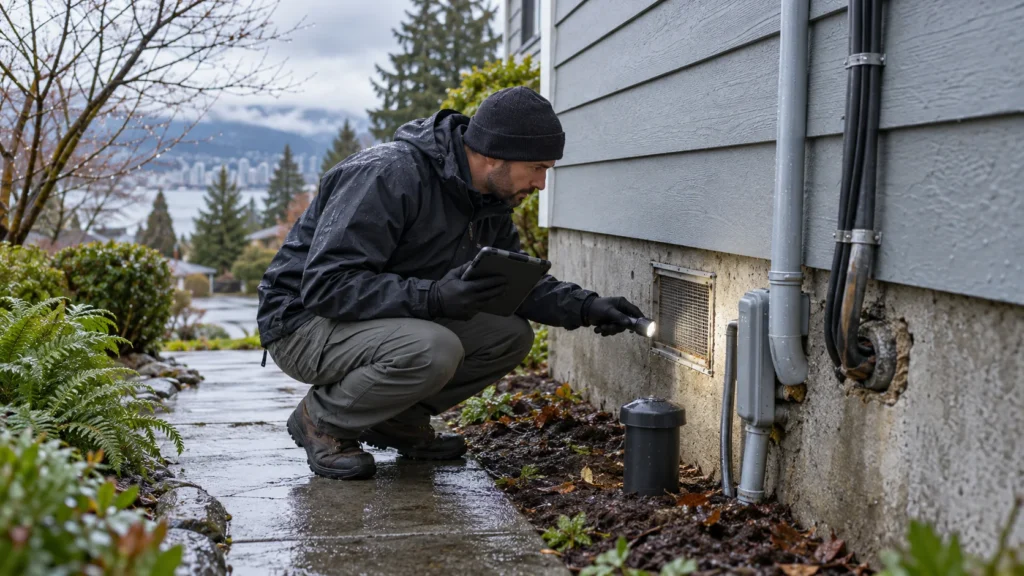
- Check accessible exterior areas for holes, damaged vents, garage gaps, and branches reaching the roof.
- Arrange an inspection if activity continues, the source is unclear, or the affected area is difficult to access.
Do not sweep or vacuum dry rodent droppings. Before cleaning, consult current public health guidance for suitable ventilation, protective equipment, disinfecting, disposal, and handwashing precautions. Consider professional cleanup for extensive contamination.
Avoid casual use of poison or bait, particularly where children, pets, or wildlife could be exposed. If rodenticides are being considered, obtain advice from a properly qualified provider and follow applicable product directions and rules.
What Should You Avoid Doing During a Rodent Problem?
Do not seal every visible opening immediately if rodents may still be inside. Closing the wrong opening can trap an animal in a wall, attic, crawl space, or occupied room.
Do not rely on an ultrasonic device as the full solution. A control plan should address food sources, shelter, entry points, and evidence of continuing activity.
Do not leave traps, bait, or poison where children, pets, residents, employees, or wildlife can reach them. Do not place products without reading and following their labels.
Avoid moving contaminated insulation or nesting material without appropriate precautions. Larger contaminated areas, inaccessible spaces, and extensive activity may require professional cleanup or another qualified trade.
Tenants should notify their landlord or property manager promptly and keep a record of the report. The City of Vancouver advises tenants to contact their landlord first about rats or mice inside a home. This is general information, not legal advice about tenancy responsibilities.
How Does Professional Rat Removal Vancouver Service Work?
Professional rodent control usually begins with inspection and identification. The technician looks for droppings, nesting areas, travel routes, food and water sources, structural gaps, damaged vents, and other possible entry points.
A practical service plan may include the following stages:
| Stage | What it should address |
| Property assessment | Building type, affected areas, access, occupants, pets, and reported activity |
| Identification | Rat, mouse, or another animal, with likely nesting and travel areas |
| Control plan | Appropriate traps, monitoring, or another permitted method |
| Exclusion plan | Openings around roofs, foundations, doors, vents, pipes, and cables |
| Sanitation guidance | Food storage, garbage, compost, clutter, water, and contaminated areas |
| Follow-up | Activity after treatment, trap results, new evidence, and remaining entry points |
No Monkey Biz offers residential pest control services in Vancouver and Greater Vancouver. Vancouver Coastal Health advises getting help from a licensed pest control operator when dealing with a household infestation. A written quote should identify what is included and excluded. For example, trapping may not include building repairs, contaminated insulation removal, electrical repairs, or opening finished walls.
How Can You Help Prevent Rats and Mice From Returning?
Prevention works best when food, water, shelter, and entry routes are addressed together. Closing one hole will have limited value if waste remains accessible or another opening is nearby.
Use this prevention checklist:
- Keep garbage and compost in containers with tight-fitting lids.
- Remove fallen fruit, nuts, and spilled bird seed.
- Bring pet food indoors after feeding.
- Repair leaking taps and other accessible water sources.
- Reduce clutter in garages, carports, basements, and storage areas.
- Store firewood and lumber away from exterior walls and above the ground.
- Trim dense plants near the building.
- Cut branches that provide access to roofs or balconies.
- Repair damaged exterior vents and door sweeps.
- Check gaps around pipes, cables, siding, foundations, and garage doors.
- Keep roof edges and gutters clear of leaves and nesting material.
- Reinspect previously repaired areas for new gnawing or movement.
The City of Vancouver recommends addressing food sources, waste, vegetation, clutter, and possible entry points around foundations and roofs. Roof and gutter debris can create sheltered areas or hide openings near fascia and roof edges. Related gutter cleaning and roof moss removal may help expose areas that need repair, although cleaning alone does not remove an established rodent problem.
Do Surrey and Burnaby Properties Face Different Rodent Conditions?
Rodent problems occur throughout the Lower Mainland, but building type, landscaping, waste storage, and surrounding development affect each property differently.
Surrey includes newer subdivisions, established neighbourhoods, townhome complexes, commercial sites, and properties near green spaces. Property owners seeking pest control in Surrey should report whether activity appears near the roof, garage, crawl space, kitchen, waste area, or landscaping.
Burnaby combines older homes, new construction, high-rise buildings, commercial areas, steep sites, and heavily treed neighbourhoods. A Burnaby pest control assessment should consider shared walls, parkades, garbage rooms, roof access, utility routes, and neighbouring activity where relevant. Location alone does not identify the rodent or determine the treatment. Inspection findings should guide the plan.
Frequently Asked Questions
Do Rats Come Inside in Winter in Vancouver?
Yes, rats may enter Vancouver buildings during fall and winter while looking for food, water, shelter, and nesting areas. Indoor activity may become more noticeable during wet or cold weather, but rats can occupy buildings at any time of year.
How Do Rats Get Into a House?
Rats can enter through gaps around foundations, roofs, doors, vents, siding, pipes, cables, crawl spaces, and damaged building materials. Roof rats may also reach upper areas using trees, shrubs, fences, balconies, and nearby structures.
Is One Rat a Sign of More?
One rat confirms that the property offers access or attracts rodent activity, but it does not reveal the total number present. An inspection should look for droppings, nests, travel routes, entry points, food sources, and additional activity before estimating the extent of the problem.
How Long Does Rat Removal Take?
The timeline depends on the species, number of activity areas, building design, food sources, control method, and whether entry points can be closed. No fixed timeline should be promised before inspection, and follow-up may be needed to confirm that activity has stopped.
Request a Free Quote
To request a free quote, provide the property address, property type, where signs were found, when activity was noticed, and whether children or pets use the affected area. Include photographs if they can be taken without disturbing droppings or nests.
Use the No Monkey Biz contact form or call 604-307-8323. No Monkey Biz assesses the property, provides a written quote stating what is included and excluded, plans access before scheduling, and reviews completed work.