
Most homes should have the dryer vent cleaned about once a year, and more often with heavy laundry use or a long vent run. Warning signs of a clogged vent include clothes taking longer to dry, a hot laundry room, a burning smell, and lint collecting around the outside vent cover. Lint buildup is a known cause of household dryer fires.
Dryer vent cleaning in Vancouver matters more in fall and winter, when outdoor drying isn’t practical and dryers run more often. No Monkey Biz, a Greater Vancouver exterior cleaning and property maintenance company serving the Lower Mainland since 2012, cleans dryer vents for homeowners, landlords, and strata buildings. This guide covers the warning signs, why lint is a fire risk, and how often your vent needs attention.
What Is a Dryer Vent and Why Does Lint Build Up?
The dryer vent is the duct that carries hot, moist air from the back of the dryer to the outside of the building. The lint screen catches most lint, but not all of it. Fine fibres pass through and settle along the inside of the duct, especially at bends, joints, and low points.
Over time, that lint narrows the duct and slows airflow. In damp climates like the Lower Mainland, moisture can combine with lint and create denser blockages. Long vent runs, multiple bends, and vents that travel through walls or ceilings to reach the outside build up faster than short, straight runs.
What Are the Signs a Dryer Vent Is Clogged?
Watch for these warning signs:
- Longer drying times: Clothes need more than one cycle, or take noticeably longer than they used to.
- Hot laundry room: The room or the top of the dryer feels unusually hot during a cycle.
- Burning smell: A hot or scorched smell while the dryer runs.
- Hot clothes: Clothes come out very hot to the touch but still damp.
- Lint around the outside vent: Lint collecting on or around the exterior vent cover.
- Vent flap not opening: The outside flap barely moves, or doesn’t open at all, when the dryer is running.
- Excess humidity: Condensation or a musty smell in the laundry area.
If you notice a burning smell, stop using the dryer until the vent has been checked.
Can a Clogged Dryer Vent Cause a Fire?
Yes. Lint is highly flammable, and a clogged vent traps heat inside the dryer and duct.
Ontario’s Office of the Fire Marshal and Emergency Management lists lack of dryer maintenance as a leading cause of dryer fires in the home and warns that lint buildup can lead to a fire. U.S. fire data from the National Fire Protection Association has also identified failure to clean as the leading cause of home clothes dryer and washer fires.
Cleaning the lint screen after every load helps, but it doesn’t clear lint that has already settled inside the vent.
How Often Should Dryer Vents Be Cleaned?
| Property Type | Suggested Frequency |
| Typical household | Once a year |
| Large household or heavy daily use | Every six to nine months |
| Long or complex vent run (multiple bends, roof or upper-floor exit) | Once a year or more, based on inspection |
| Rental units | Once a year, or between tenancies |
| Strata and multi-unit buildings | On a scheduled building-wide program |
| Laundromats and commercial laundry | More often, based on use |
These are general guidelines. A vent that clogs quickly may point to a problem with the vent route, the duct material, or the exterior cover.
What Does Professional Dryer Vent Cleaning Include?
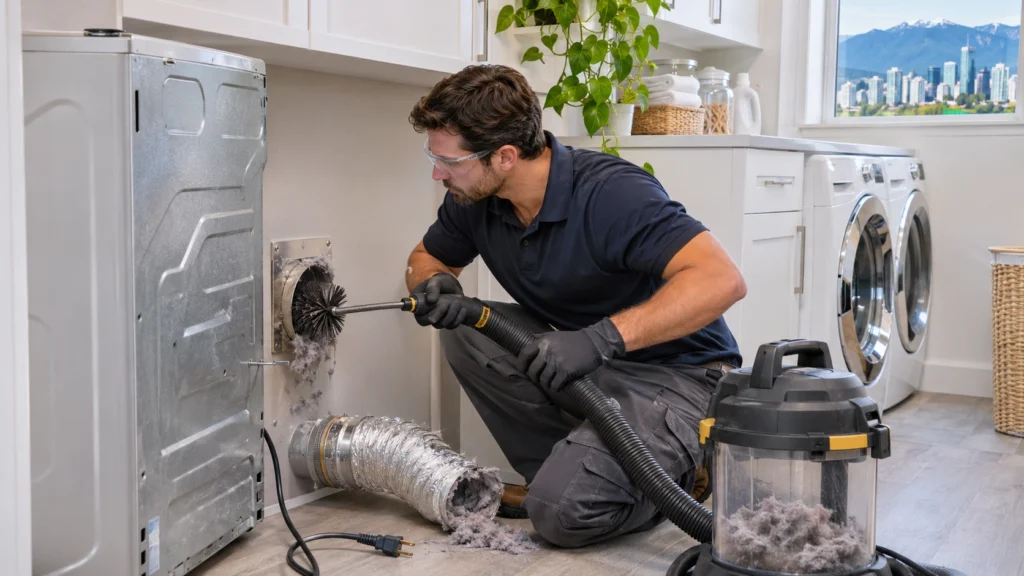
Professional dryer vent cleaning removes lint and loose debris from the accessible exhaust route, from the dryer connection to the outside vent. A typical service may include:
- Checking the vent route, connection points, and exterior vent cover before starting
- Cleaning the accessible duct with specialized equipment
- Clearing lint from the exterior vent opening
- Checking that air flows out properly after cleaning
- Reporting visible damage, disconnected sections, or areas that couldn’t be reached
Routine cleaning is not appliance repair, duct replacement, or a code inspection. If the vent is crushed, disconnected, or made of unsuitable material, you’ll be told so you can decide whether a qualified installer is needed.
Who Is Responsible for Dryer Vent Cleaning in a Strata Building?
It depends on the building and its bylaws. In many strata buildings, the vent duct passes through walls, ceilings, or shared shafts that may be common property. The dryer itself and the connection behind it are usually the owner’s or resident’s responsibility.
Because shared vent runs are hard for individual residents to check, many strata councils and property managers arrange building-wide cleaning. That also makes it easier to give residents notice, arrange unit access, and spot problems that affect more than one unit. Strata approval may be required when the duct passes through common property.
What About Rental Properties?
Landlords and property managers don’t see day-to-day dryer use, so scheduling vent cleaning once a year or between tenancies is a simple way to stay ahead of buildup. Tenants should be asked to clean the lint screen after every load and report warning signs such as long drying times or a burning smell.
What Can You Do Between Professional Cleanings?
- Clean the lint screen after every load.
- Wash the lint screen occasionally with warm, soapy water if dryer sheets leave a film.
- Check the outside vent cover regularly and keep it clear of plants, snow, and debris.
- Make sure the flexible connector behind the dryer isn’t crushed or kinked.
- Don’t leave the dryer running when no one is home.
- Follow your dryer manufacturer’s instructions for the type of vent duct to use.
Birds and rodents can also nest in damaged exterior vent covers, especially in fall and winter. If you see nesting material or signs of activity, pest control may be needed before the vent is cleaned.
Dryer Vent Cleaning Before Winter
Dryer vent cleaning is one item on our fall and winter exterior maintenance checklist, along with gutters, roof moss, and walkways. No Monkey Biz, a Greater Vancouver exterior maintenance company since 2012, provides dryer vent cleaning across the Lower Mainland, including Surrey, Richmond, and Burnaby.
Frequently Asked Questions
How often should dryer vents be cleaned?
Most homes should have the dryer vent cleaned about once a year. Large households, heavy daily use, and long or complex vent runs may need cleaning more often. Rental and strata properties often schedule cleaning annually or between tenancies.
Can a clogged dryer vent cause a fire?
Yes. Lint is flammable, and a clogged vent traps heat. Ontario’s Office of the Fire Marshal and Emergency Management lists lack of dryer maintenance as a leading cause of dryer fires, and U.S. fire data identifies failure to clean as the leading cause of home dryer and washer fires.
Who is responsible for dryer vent cleaning in a strata building?
It depends on the building and its bylaws. Vent ducts often pass through common property, so many strata councils arrange building-wide cleaning, while owners are usually responsible for the dryer and its connection. Check your strata’s bylaws or ask your property manager.
How long does dryer vent cleaning take?
It depends on the length and access of the vent run. A typical single-unit vent usually takes less time than a long run through several floors or a shared shaft. Your quote should give an estimate based on the property.
Request a Free Quote
Whether it’s one dryer or a whole building, a quick assessment is the place to start. Send us your property address, the type of property, the number of units, and any warning signs you’ve noticed, such as long drying times or lint around the outside vent.
Request a free quote online or call 604-307-8323.